
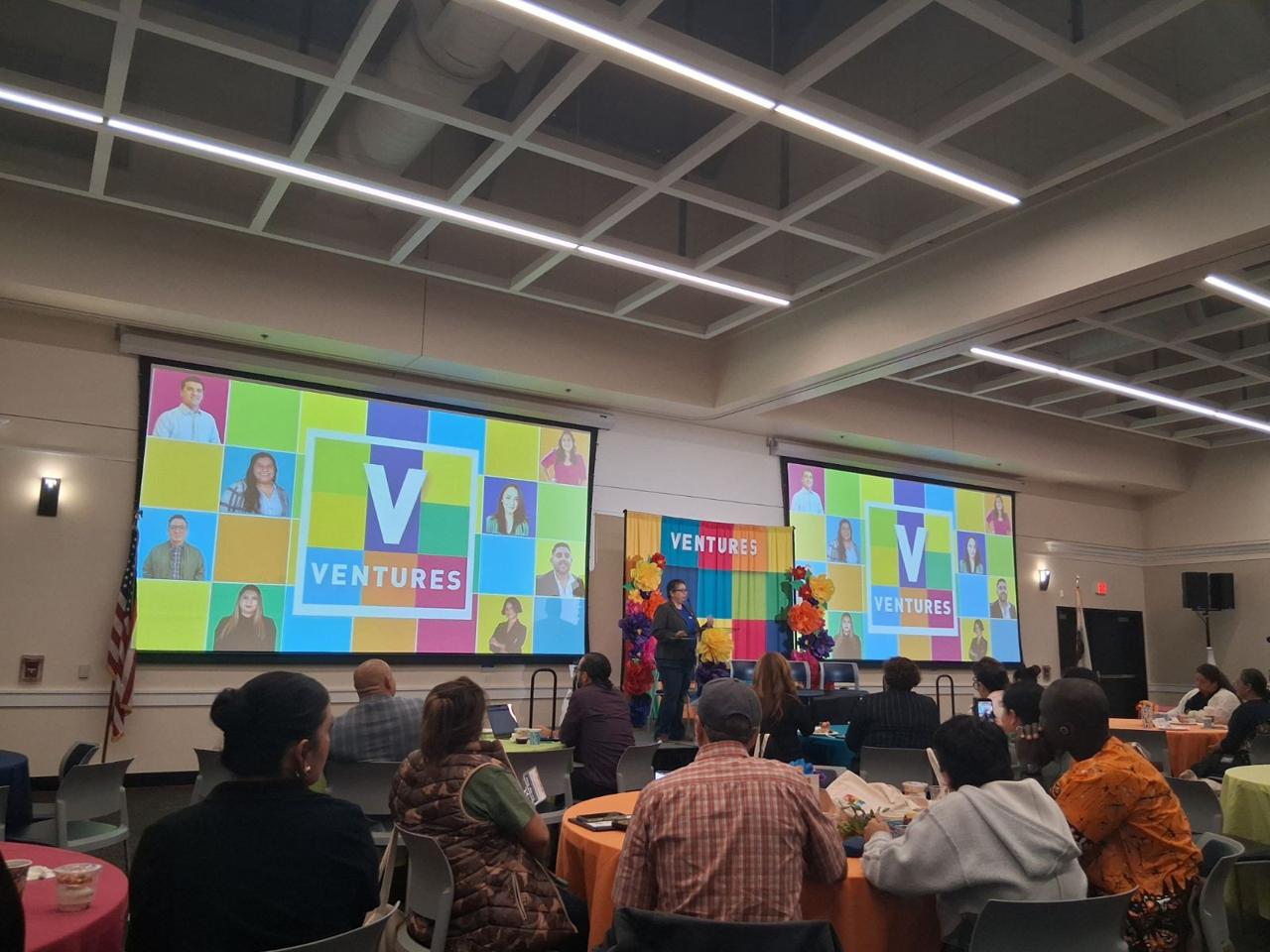

Sara Rubin here, with big ideas on my mind. That’s because I spent part of the day Friday attending the third annual Co-op Day hosted by the nonprofit Ventures . Leaders within the nonprofit are doing a lot of technical work to help people launch and sustain cooperatives, but Executive Director Maria Cadenas gave opening remarks that focused on grand ambitions.
“We want to have an economy that works for all,” she said in Spanish. “We have the audacity to believe in and the courage to create that world…We are here to dream and learn from one another.”
Dreams and courage are more poetic than the technical necessities of things like financing and insurance requirements, but I was persuaded that they are important ingredients to the success of a cooperative—the same way I believe they’re important ingredients in any business, as I’m guessing any entrepreneurs out there would agree.
But the business landscape (see above: financing, insurance, etc.) is crafted with standard business structures in mind, rather than collective ownership, adding some obstacles for co-op owners. Some of the day’s breakout sessions were meant to get into those weeds. One session that stuck with me combined both the big dream and some of the technical how-to, focused on a worker-owned cooperative that rehabilitates and rents out housing in Baltimore, Maryland.
David Lidz had lost his job and was fresh out of rehab and struggling to find work in the early 2000s. His AA meetings took him through Baltimore neighborhoods full of homes he described as architecturally beautiful but crumbling. He stumbled into a crew doing a trash-out, an assignment from a mortgage lender to clear out the worst of the trash—dead cats, dirty diapers—and board up a building to “stabilize an asset” headed for foreclosure. Lidz, hungry for a job, got on some gloves and a mask and learned how to clean up a decrepit home.
He got more and more work thanks to the Great Recession . He hired people he knew from AA to help. “We were glad to have jobs, dirty and hard and dangerous as they were,” Lidz said. “We identified with the houses. They were in bad shape, just like us, but could come back to being serviceable assists. We really felt that, on a spiritual level.”
He describes it as an accidental social enterprise , with more potential than Lidz or any of his colleagues could dream of at the time. They skilled up, learning not just to board a window, but to replace one; not just to put a tarp on a leaky roof, but to fix the shingles. They taught themselves construction skills. They also learned the history of redlining and how disinvestment in certain neighborhoods had happened not by accident, but by design. They became their own workforce development organization.
Today, the worker-owned cooperative Streetwell owns 30 Baltimore properties . Ten are in progress, and 20 are rented out; the two-dozen worker-owners also do maintenance on the assets they now own. “It’s organic and surprisingly beautiful,” Lidz said.
It’s one creative solution in an economy that shuts out too many people . It’s also a template for what Cadenas wants to share: a dream of a more equitable economy with practical paths to get there.